
10 Early AC Warning Signs to Prevent Costly AC Repairs – Smart Heat And Cool
- Smart Heating & Cooling
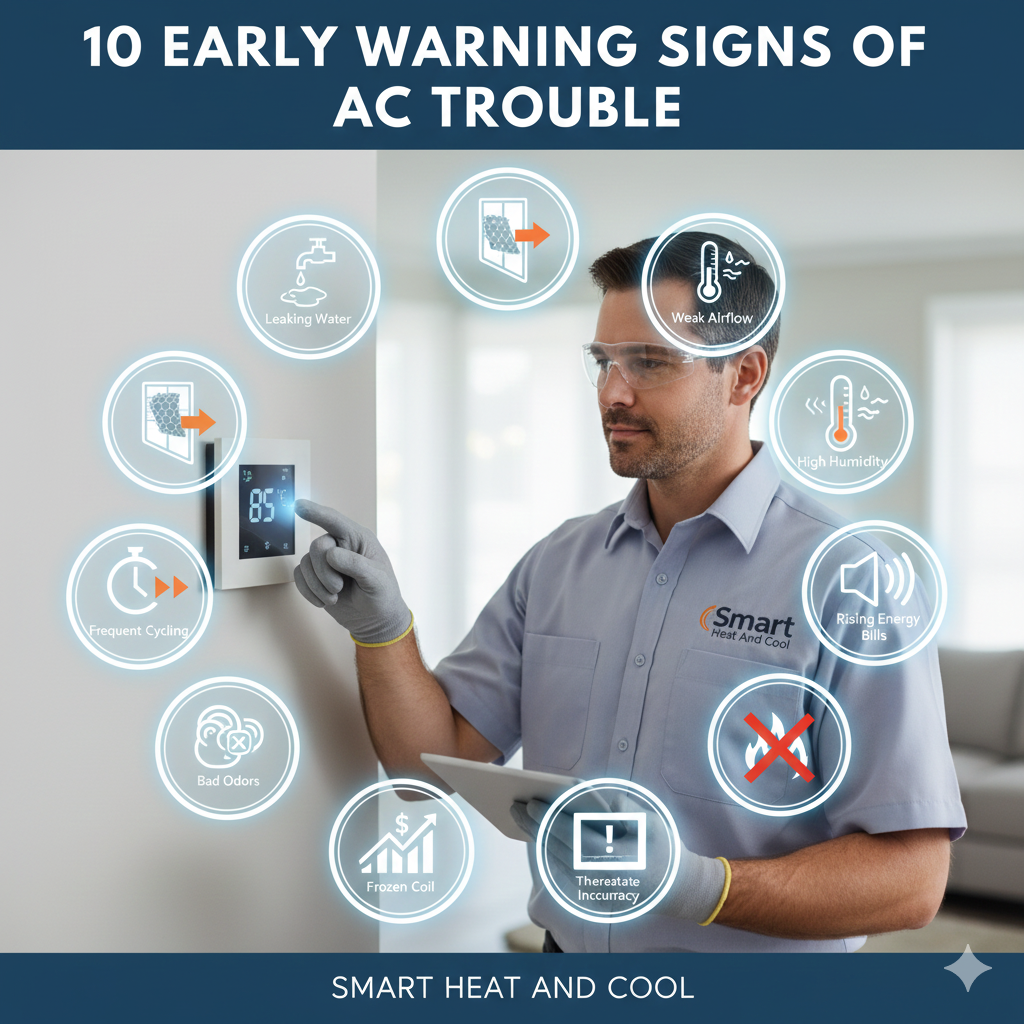
If you reside in a climate like St. Petersburg, Florida, where consistent heat and humidity are constants, your air conditioning system transcends mere convenience; it becomes an absolutely critical component of your home’s infrastructure, essential for maintaining both comfort and structural integrity. A critical error that many homeowners commit is dismissing minor operational irregularities, which often leads to an unavoidable and total system failure precisely when the heat is at its most extreme, subsequently necessitating expensive emergency repairs and extended periods without cooling. Recognizing the subtle, initial AC warning signs as they begin to appear is therefore the most fundamental and effective element of sound preventive maintenance
At Smart Heat And Cool, our core mission is to empower every single homeowner with the knowledge to accurately identify the early signs of AC failure long before these small issues can compound and escalate into a major, system-compromising crisis. By diligently monitoring your system’s behavior and recognizing these early indicators, you can effectively utilize these crucial AC troubleshooting tips to significantly prevent costly AC repairs and ensure your vital cooling equipment operates with exceptional efficiency and uncompromising reliability throughout the year, safeguarding your comfort and your investment.
1. Weak Airflow
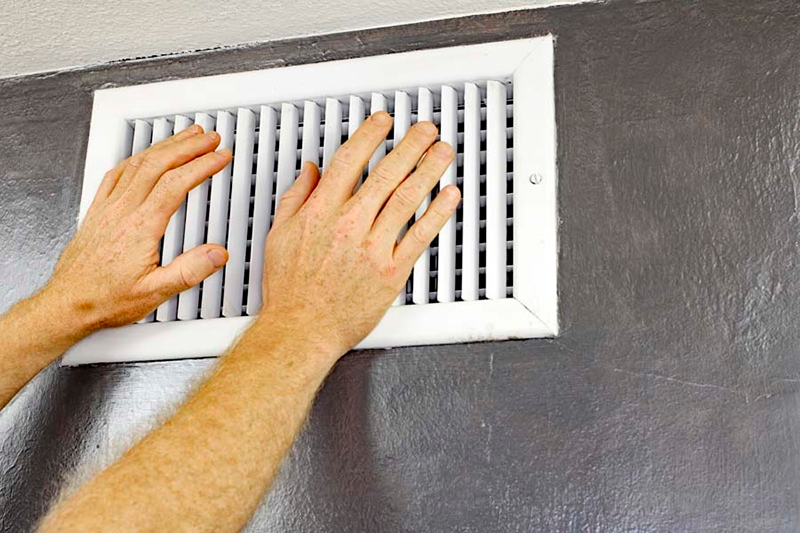
When the volume or velocity of the air emitted from your supply vents is noticeably reduced, it signals that your system is critically failing to circulate conditioned air throughout your living spaces as designed. This diminished airflow can be attributed to easily correctable issues like a heavily impacted, dirty air filter, but it can also be a symptom of more severe mechanical issues, such as a failing blower motor or substantial air loss due to widespread ductwork leaks. The consequence of weak airflow is uneven cooling and a heavy demand on the compressor, which must run for extended periods to reach the thermostat’s set point, causing unnecessary component strain. Promptly addressing weak airflow is vital to restoring system balance and preventing further mechanical deterioration.

CALL US NOW
FOR IMMEDIATE ASSITANCE.
2. Strange Noises
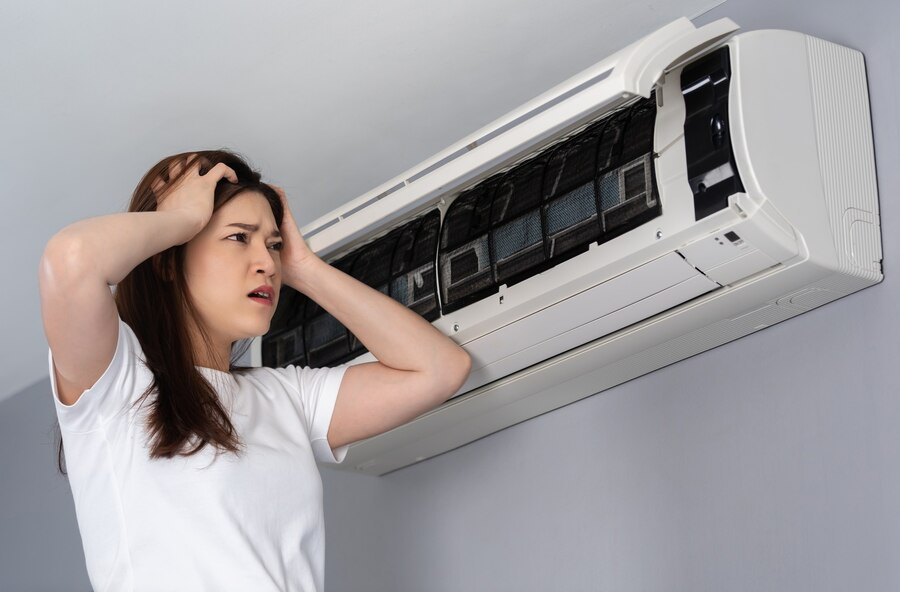
A properly functioning AC unit should operate with a low, consistent sound that is rarely noticeable. Consequently, any new or abrasive sounds—such as a persistent grinding, a high-pitched squealing, a repetitive metallic rattling, or a loud, intermittent banging—are definitive early signs of AC failure that demand immediate professional diagnosis. Squealing often points to a worn fan belt or dry, failing motor bearings, while rattling typically indicates a loose internal component that could cause significant damage if left vibrating. These auditory warnings signify that physical damage is actively occurring, and isolating the source quickly can prevent a small repair from escalating into a major, multi-component failure.
3. Warm Air from Vents
If the air being discharged from your vents is consistently warm or ambient temperature, it indicates a critical problem in the system’s heat exchange process. The most common and serious cause is a significant refrigerant leak, which undermines the unit’s ability to absorb heat from the indoor air. Other possibilities include a non-functional compressor or an electrical failure within the controls. If the air is warm, your unit is wasting energy without providing any cooling effect. Because the underlying causes are complex and often involve regulated chemicals, you should immediately power down the unit to prevent damage and contact a qualified ac company st.pete for urgent service.
4. High Humidity Indoors
A core function of your AC unit, particularly in humid environments, is to dehumidify the air as it cools. If your indoor environment begins to feel clammy, sticky, or unusually heavy, the system is struggling to perform this moisture removal task. This issue often results from a clogged condensate drain line or an improperly sized unit that short cycles, preventing adequate dehumidification. High indoor humidity is detrimental not only to comfort but also to indoor air quality, promoting the growth of mold and mildew. Addressing this problem requires professional assessment to ensure proper moisture management and restoration of a comfortable, healthy atmosphere.

5. Frequent Cycling (Short Cycling)
When your AC system turns on and off too frequently and runs only for short durations, this “short cycling” behavior is highly detrimental to the unit’s longevity. Since the greatest stress and energy consumption occur during startup, short cycling accelerates wear on the compressor, the most expensive component, and drastically reduces overall energy efficiency. This critical issue can be triggered by a simple problem like poor thermostat placement or calibration, or by a major electrical fault or a system that is significantly oversized for the cooled space. Identifying and correcting the root cause is essential to avoid premature compressor failure and restore efficient operation.
6. Leaking Water
The discovery of water pooling near the indoor air handler or furnace is a clear and immediate warning sign. This leakage is typically caused by a blockage in the condensate drain line, where sludge and debris prevent water collected by the evaporator coil from draining outside. This backup causes the water to overflow the drain pan, risking significant water damage to ceilings, walls, and flooring. While a clogged drain line is a relatively simple fix, ignoring this AC warning sign can quickly lead to expensive mold remediation. Powering down the unit and scheduling prompt professional service is the mandatory first step when water leaks occur.
7. Bad Odors
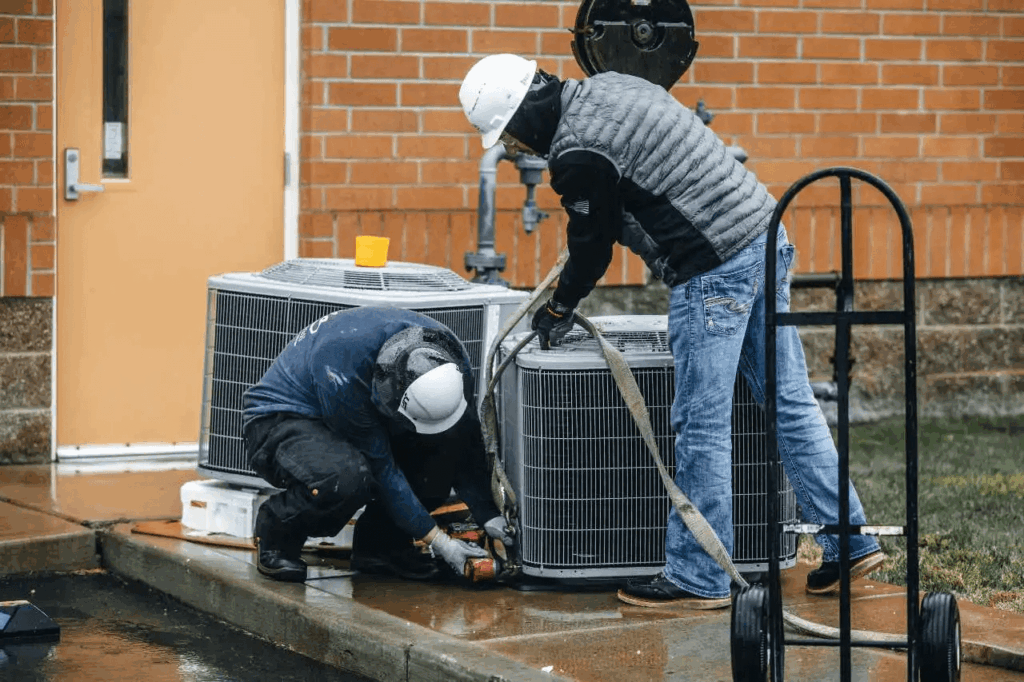
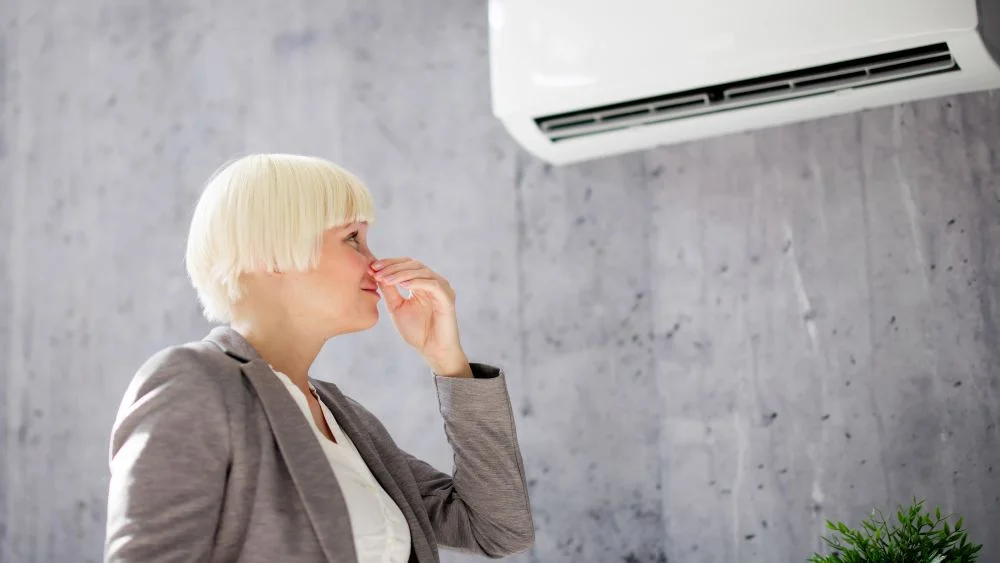
Any unusual odors emanating from your air vents demand attention, as they indicate a problem within the system’s interior environment. A moldy or musty smell often signifies biological growth, such as mildew or bacteria, on the evaporator coil or within the ductwork, compromising indoor air quality. Conversely, a sharp, burning smell is much more serious and suggests an electrical malfunction, such as an overheating motor or compromised wiring. If a burning smell is detected, you must immediately shut off the power at the breaker and contact a technician, as this poses a serious safety and fire hazard.
8. Rising Energy Bills
A sudden, significant increase in your monthly utility costs, without any corresponding change in usage patterns, is a strong indicator that your AC unit is operating inefficiently. This excessive consumption is an undeniable AC troubleshooting tips signal that the unit is working much harder than necessary to satisfy the thermostat setting. The causes usually relate to reduced efficiency from dirty coils, low refrigerant levels, or failing components that are drawing excessive current. While not an immediate failure, this financial burden is a clear warning that an underlying mechanical issue is present, which requires professional maintenance to resolve and restore peak efficiency.

9. Frozen Coil
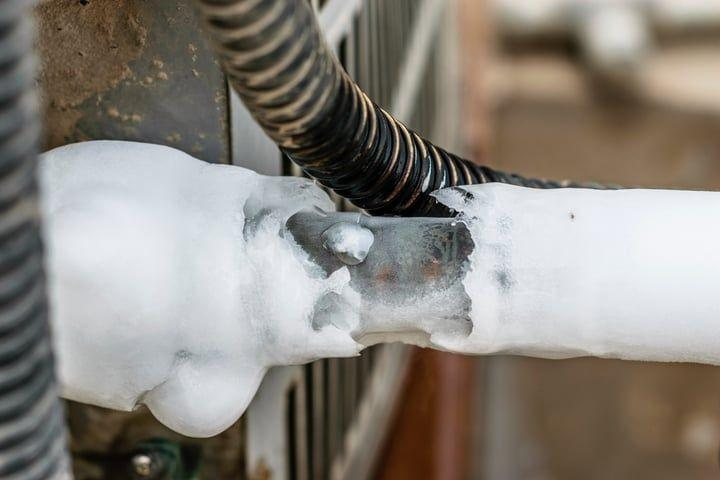
Seeing ice accumulation on the outdoor refrigerant lines or the indoor evaporator coil is an urgent red flag. This paradoxically happens not from excess cold, but from restricted heat absorption caused either by critically low refrigerant levels (indicating a leak) or severely insufficient airflow. Airflow restriction often stems from an extremely clogged filter, which prevents enough warm air from passing over the coil, allowing moisture on the surface to freeze. A frozen coil cannot cool your home and puts immense strain on the compressor. Immediately turn the unit off to allow thawing and call one of the leading air conditioning companies st petersburg fl for expert repair.
10. Thermostat Inaccuracy
The thermostat is the critical control center for your entire cooling system, and any failure to accurately read or communicate temperature will result in flawed operation. Inaccuracy can manifest as the AC running far too long, leading to excessive cold, or short cycling, leaving the home warm. While a simple battery change might solve the issue, it often indicates a faulty sensor or a deeper electrical communication problem between the control board and the unit. Reliable temperature maintenance is essential for efficiency and comfort, making prompt repair necessary to ensure the unit starts and stops exactly when it should, preventing unnecessary wear and wasted energy.
If you recognize any of these critical issues, do not delay. Acting quickly is the best way to avoid a full-system crisis during peak demand and prevent costly AC repairs. As one of the most trusted ac repair st.pete, Smart Heat And Cool is ready to provide the professional, precise service your system needs for reliable comfort and lasting performance.
FAQ's
Answers to common questions about our HVAC services, pricing, and local support.
The single easiest and most common culprit for weak airflow is a heavily clogged or dirty air filter. Before taking any other troubleshooting steps, turn off your system, locate the air filter (usually near the indoor air handler or in the ceiling), and inspect it. If the filter is visibly gray or black, replacing it immediately can significantly restore proper airflow and prevent unnecessary strain on your blower motor. If airflow remains weak after the filter change, the problem is likely a deeper issue like a motor fault or ductwork leak, and professional service is necessary.
No, short cycling should not be ignored. This behavior is highly detrimental because the highest energy consumption and mechanical wear on the critical compressor occur during startup. Frequent on/off cycles accelerate the deterioration of the compressor, drastically reducing your unit’s lifespan and efficiency. While checking your thermostat for proper calibration is a quick first step, short cycling often points to complex issues like electrical faults or improper system sizing, and you should call a technician quickly to avoid a costly total breakdown.
Ice accumulation on the indoor evaporator coil or outdoor refrigerant line is paradoxical—it occurs because the unit is struggling to absorb heat efficiently, not because it's too cold. The two primary causes are: 1) Severely restricted airflow, often due to a dangerously dirty air filter, or 2) Critically low refrigerant levels, usually caused by a leak. You must immediately turn the unit off to allow the ice to thaw, as running it frozen can severely damage the compressor, and then contact a professional immediately for diagnosis and repair.
A musty or moldy smell suggests a biological issue, such as mildew or bacterial growth, typically occurring due to excess moisture on the evaporator coil or within the drain pan. This primarily affects air quality. A sharp, chemical, or burning smell, however, is much more serious, indicating an electrical problem like an overheating wire or a motor burning out. If you detect a burning smell, you must immediately cut power to the unit at the circuit breaker to eliminate a potential fire hazard and call for emergency service.
Yes, a sudden and unexplained spike in your energy bills is a clear AC troubleshooting tips signal that the unit is operating with significantly reduced efficiency. Even if the house feels cool, the AC is working much harder and longer than it should be to achieve that temperature. This reduced efficiency is often caused by dirty coils, low refrigerant, or failing components drawing excess current. Treating this financial warning sign with a professional tune-up can restore peak efficiency and prevent costly AC repairs down the road.
